

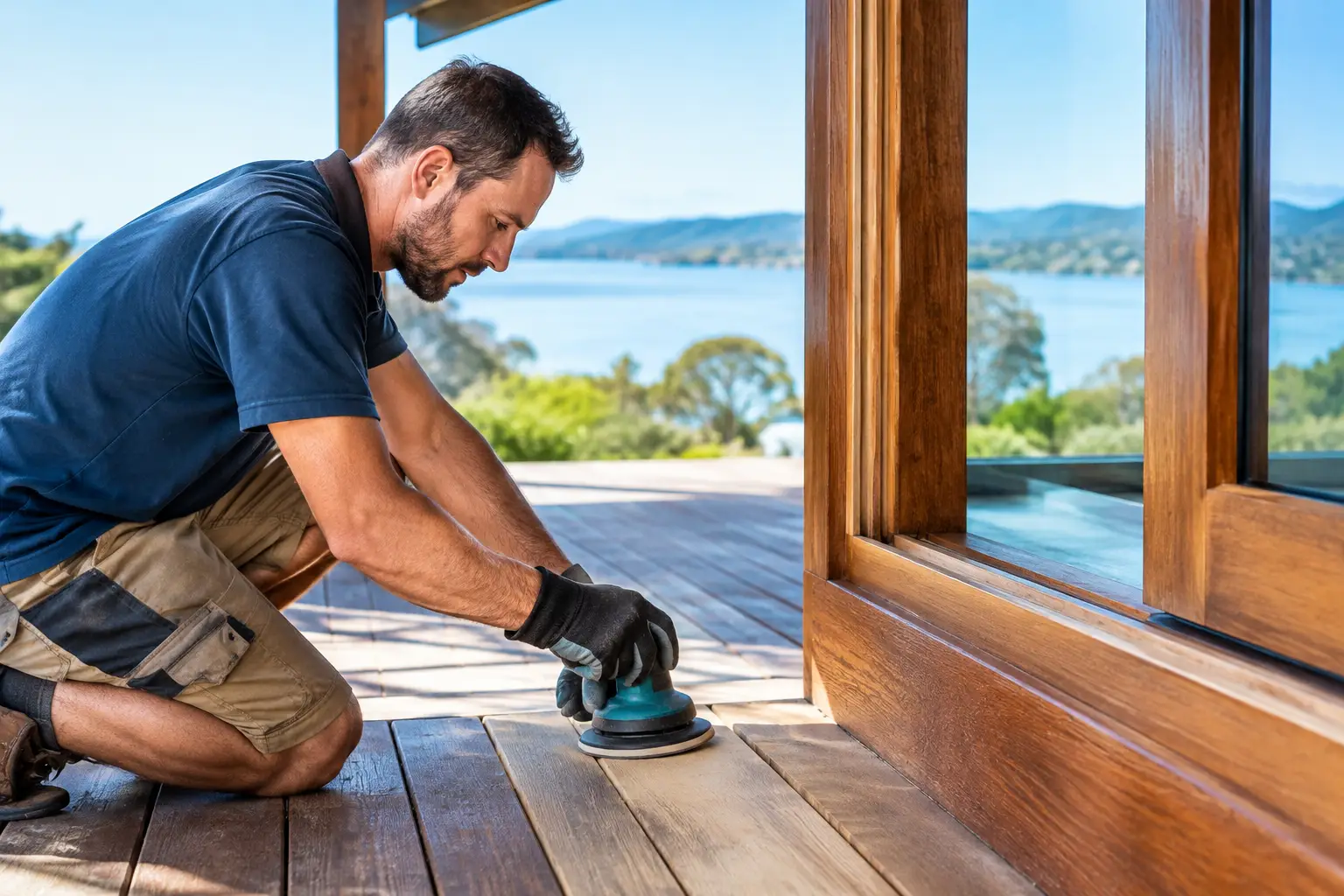
A weathered deck can make an otherwise well-kept home feel neglected. Faded boards, peeling coatings, rough handrails and dark water marks are common around the Northern Rivers, where strong sun, salt air, humidity and regular rain all take their toll. Proper timber restoration is not simply a fresh coat of stain. It is a careful process of assessing the timber, correcting what can be repaired and applying the right finish to protect its character and service life.
For homeowners, strata committees and property managers, the value is practical as well as visual. Restored timber improves presentation, helps prevent further deterioration and makes outdoor and entry areas safer and more enjoyable to use. The result, however, depends heavily on the preparation done before any coating is applied.
Why coastal timber needs regular attention
Timber moves with changes in heat and moisture. On decks, screens, balustrades, fascias, doors and window joinery, that movement can gradually break down a coating. Once the surface is compromised, moisture can enter the timber. Sun then dries it out again, creating a cycle that leads to splitting, cupping, greying and peeling.
Coastal exposure adds another layer of pressure. Salt carried in the air can settle on exterior surfaces, while humidity can encourage mould and mildew in shaded areas. A deck facing north or west may suffer intense UV exposure, while a sheltered southern side can stay damp for longer after rain. This is why one approach does not suit every surface on the property.
Leaving damaged coatings in place usually makes the eventual job more involved. Timber can still look acceptable from a distance while the finish is failing at board joins, around fasteners or beneath furniture. Regular inspection allows maintenance to be planned before minor wear becomes widespread surface damage.
What professional timber restoration involves
Good timber restoration starts with an honest assessment. Not every faded surface requires full stripping, and not every old board can be brought back to a like-new appearance. The aim is to identify the condition of the timber and choose a preparation and finishing system that suits the surface, its exposure and the expected use of the area.
Cleaning is more than a quick wash
Dirt, salt residue, mould, leaf tannins and old coating fragments must be removed before restoration begins. Cleaning prepares the surface for closer inspection and helps prevent contaminants from being trapped beneath a new finish.
Pressure washing may be appropriate in some situations, but it needs to be handled with care. Excessive pressure can furrow soft timber fibres, force water deep into the boards or leave a rough surface that requires extra sanding. The correct method depends on the species of timber, the condition of the existing coating and the extent of biological growth.
After washing, timber needs adequate drying time. Applying coatings to damp timber can lead to poor adhesion, uneven colour and early coating failure. This is one reason professional work should not be rushed around changing weather conditions.
Repairs and preparation determine the finish
Once clean and dry, the timber can be properly assessed. Loose boards, protruding nails or screws, splinters, deteriorated sections and failed joints need attention before coating. On a deck, this may include securing boards and addressing rough edges that affect bare feet. On exterior doors and joinery, it may mean treating small areas of deterioration, sanding back unstable paint and restoring smooth edges where water tends to sit.
Sanding is often the stage that separates a short-lived refresh from a durable result. It removes loose or flaky material, evens out weathered fibres and provides a sound surface for the chosen coating. The goal is not to sand indiscriminately. Excessive sanding can reduce the life of thinner boards and alter the texture of timber. Careful preparation respects the material while creating the right foundation for a new finish.
Any dust must then be removed thoroughly. A clean worksite and tidy protection of surrounding surfaces matter here, particularly around pools, gardens, outdoor furniture, windows and adjoining painted areas.
Choosing the right finish for the timber
The right coating depends on both the look required and the level of exposure. Clear and semi-transparent finishes can retain more of the timber’s natural grain, but they may need more frequent maintenance on areas exposed to direct sun. Opaque coatings can offer stronger UV protection and suit previously painted timber, fascias, doors and some joinery, though they change the appearance of the surface.
Decks also need a finish that suits foot traffic, weather and routine cleaning. A product that looks excellent on a vertical screen may not be suitable for a horizontal walking surface. Likewise, an exposed beachfront deck has different demands to a covered verandah in a leafy hinterland setting.
The existing coating matters too. Compatibility between old and new products should be checked before application. Applying an unsuitable finish over a previous coating can lead to lifting, patchiness or peeling, even when the workmanship appears sound at first.
Common signs your timber needs restoration
The clearest sign is often a surface that no longer sheds water evenly. If water soaks into deck boards rather than beading on the surface, the protective coating may be wearing thin. Greying, fading and a dry, brittle appearance are also common early warnings.
Look more closely for peeling paint, cracking at joints, raised grain, splinters, black staining, mould growth and soft areas of timber. Doors and windows may show paint failure along bottom edges, sills and horizontal ledges where moisture sits. Handrails and posts should be checked for movement as well as surface wear.
For strata and commercial properties, consistent inspections are particularly useful. Shared outdoor areas receive higher traffic, and neglected timber can affect safety, presentation and maintenance planning across the site. Addressing smaller sections early is often less disruptive than waiting until an entire deck or façade requires extensive work.
How to help restored timber last longer
A professional finish will perform best when supported by straightforward care. Sweep decks regularly to remove leaf litter and dirt, especially from board gaps where moisture can collect. Wash away salt residue and spills promptly, and avoid leaving wet mats, pot plants or furniture in the same position for long periods.
Keep an eye on drainage, nearby garden growth and ventilation beneath decks. Overhanging branches can keep surfaces damp and drop organic material, while poor drainage can expose posts and lower timber sections to ongoing moisture. Small changes around the property can make a real difference to how long a finish lasts.
Avoid assuming maintenance has failed simply because timber changes slightly over time. Natural timber will respond to sun and weather. The key question is whether the protective coating remains sound and whether water is being kept out of the timber. A planned maintenance inspection is the best way to make that call before the next wet season or a period of intense summer sun.
When restoration is not enough
Restoration can greatly improve sound timber, but it cannot reverse severe structural decay. Boards that are soft, extensively split, badly cupped or no longer secure may need replacement. The same applies to damaged framing, posts or joinery where the issue extends beyond the surface.
This is not a reason to delay an assessment. In many cases, only selected boards or sections need replacement, followed by careful preparation of the remaining timber so the finished area looks considered and performs properly. A clear condition assessment helps property owners make informed decisions rather than applying a cosmetic coating over an underlying problem.
For timber around Byron Bay, Ballina, Lennox Head and the wider Northern Rivers, experience with local weather conditions matters. North Coast Painting Services takes an unhurried approach to preparation because the lasting quality of a timber finish is decided well before the final coat is applied.
Well-maintained timber gives a property warmth that manufactured materials rarely match. With timely care, sound preparation and a finish suited to its environment, it can continue to look welcoming and work hard for many years.