
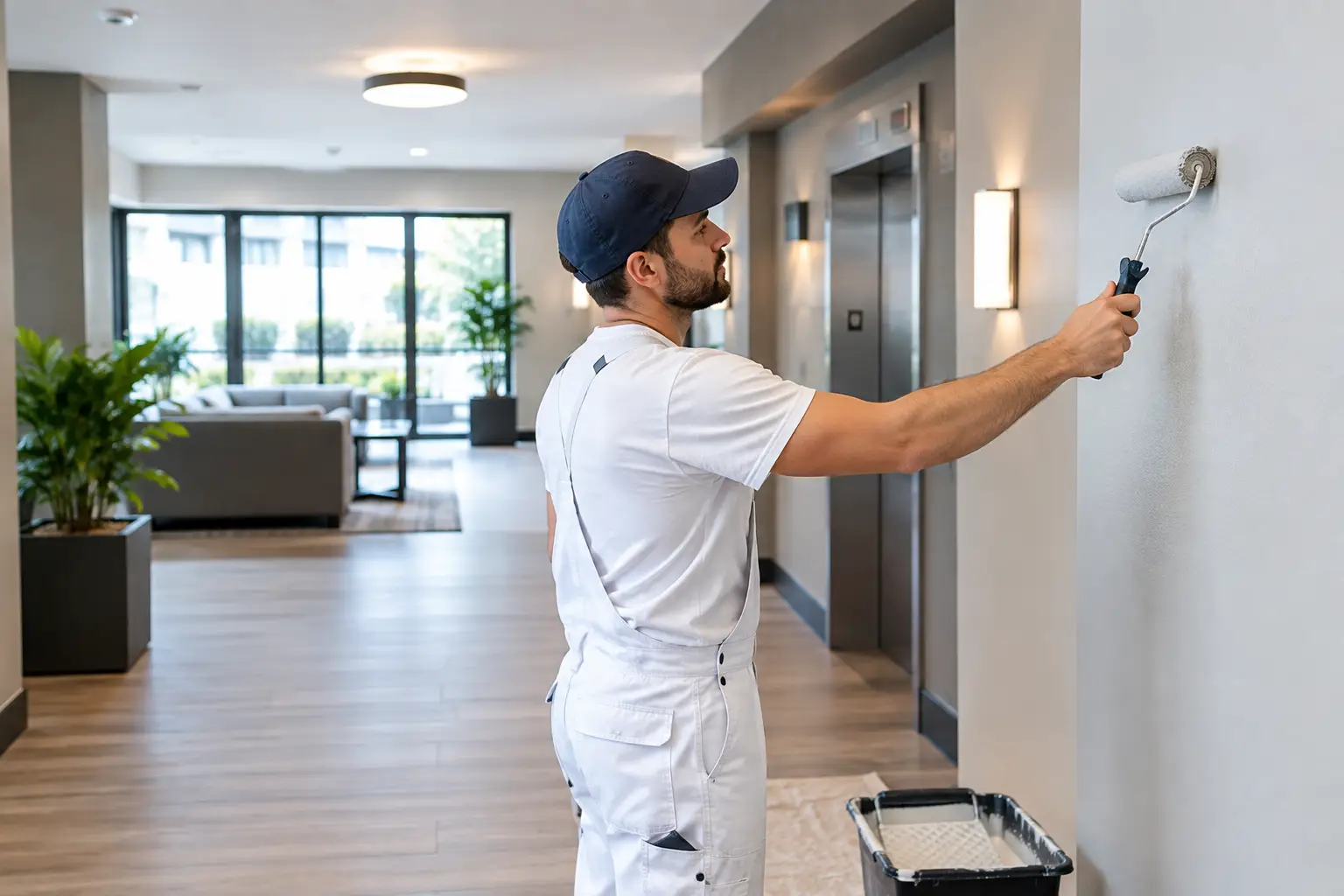
A scuffed entry wall, peeling handrail or tired stairwell can shape how residents and visitors see an entire apartment building. Apartment common area painting is not simply a cosmetic update. Done properly, it protects high-use surfaces, improves the feel of shared spaces and helps a strata property present as well cared for.
For committees and building managers, the challenge is arranging quality work without creating unnecessary disruption. That calls for a clear scope, careful preparation, reliable communication and a painting team that respects the people living around the work.
What apartment common area painting involves
Common areas are the spaces every resident, visitor or contractor passes through. Depending on the building, this may include foyers, corridors, stairwells, internal landings, lifts, shared entries, car parks, bin areas, laundry rooms, mail areas, balustrades, doors and exterior walkways.
These areas generally receive more wear than an individual unit. Bags brush against corridor walls, prams and bicycles mark corners, wet shoes move through entrances and handrails are touched every day. In coastal parts of the Northern Rivers, salt air, humidity and driving rain can also affect exposed exterior surfaces and metalwork.
A useful painting scope considers each area on its own conditions. A quiet internal hallway does not need the same coating system or preparation as an exposed stairwell, entrance gate or car park wall. Treating every surface as though it is the same is one of the quickest ways to shorten the life of the finish.
Start with a proper condition assessment
Before colours are chosen or dates are set, the building needs to be assessed carefully. Existing paint may be sound in some locations and failing in others. There may be cracks around movement joints, water staining near a roofline, rust on steel components, mould in shaded areas or damage caused by repeated impact.
Painting over these issues can make a space look better for a short time, but it does not solve the reason the coating failed. Moisture problems, for example, need attention before repainting. Rust must be removed and treated correctly. Loose or flaking paint needs to be stripped back to a sound edge so the new coating has a stable surface to hold onto.
This assessment also helps a strata committee make practical decisions about the scope. It may make sense to complete all internal common areas together while scheduling external sections around weather and access. In a smaller complex, the work may be completed efficiently in one program. In a larger building, staged work can keep key routes open and reduce inconvenience for residents.
Preparation determines the finish
The visible coat is only the final part of the job. Long-lasting common area painting depends heavily on the work that happens beforehand.
Walls and ceilings should be cleaned, patched and sanded where required. Cracks need appropriate repair, not just a quick cover-up. Gloss surfaces, doors and trim often need sanding for adhesion. Exterior areas may require washing to remove dirt, salt residue, mildew and chalky paint. Timber, steel and masonry each need the right preparation and primers for their condition.
Careful masking and protection matter just as much in shared buildings. Floors, lift surrounds, intercoms, letterboxes, signage and nearby landscaping should be protected from paint splashes and dust. A clean worksite is not an optional extra when people are coming and going throughout the day.
An unhurried approach is especially valuable here. Rushing preparation to get colour on the walls sooner often shows up later as peeling edges, uneven repairs or premature wear in the busiest parts of the property.
Choose colours for the building, not just a sample card
Colour selection for common areas should support the building as a whole. The right scheme can make a narrow corridor feel lighter, give an older foyer a cleaner appearance and create a consistent connection between internal and external spaces.
Practicality should sit alongside appearance. Very pale walls can look fresh, but may show marks quickly in a busy stairwell. Very dark colours can hide some scuffs, yet make enclosed spaces feel smaller or require more frequent touch-ups where they are damaged. Mid-tone, durable colours are often a sensible choice for high-contact walls, with lighter ceilings helping retain brightness.
Existing finishes need consideration as well. Floor tiles, stone, carpet, timber, aluminium frames and entry doors all influence which colours will work. If the complex has an established colour schedule, a painter should match it accurately and record the selected products and colours for future maintenance.
For exterior common areas, colour should also suit the surrounding setting and the way the building receives sun and weather. What looks good on a small sample can feel much stronger across a large rendered wall, so testing colours in place is worthwhile.
Plan the work around residents and access
A well-managed project recognises that common areas are not empty work zones. Residents need access to their homes, deliveries still arrive and emergency paths must remain clear.
Clear notice before work begins gives residents time to plan around affected areas. Notices should explain the work areas, expected timing, any temporary access changes and sensible precautions, such as keeping windows closed near exterior preparation. During the job, daily communication helps avoid surprises when a corridor, stairwell or entry point is being worked on.
Staging is often the best approach. One side of a corridor may be completed before the other, or stairwell work may be planned so a safe route remains available. Fresh paint needs adequate drying time, particularly in humid conditions, so barriers and signs should stay in place until surfaces can be used safely.
The balance depends on the layout of the property. A compact walk-up block may have fewer access options than a building with multiple entries and lifts. Experienced painters plan the sequence around those realities rather than forcing the building into a one-size-fits-all program.
Use coating systems suited to shared spaces
High-traffic areas need finishes that can stand up to regular cleaning and minor contact. The best choice depends on the surface and location, but durability, washability and appropriate sheen level should guide the decision.
Lower-sheen wall finishes are commonly favoured in corridors and foyers because they soften the appearance of minor surface imperfections while still allowing careful cleaning. Doors, frames and handrails may need a tougher finish that handles repeated touching. In exterior areas, coatings must be suited to sun, rain and coastal exposure.
The aim is not to use the shiniest or toughest product everywhere. Higher sheen can highlight wall repairs and surface unevenness, while the wrong coating on masonry, timber or metal can fail early. A sound system matches the substrate, its exposure and the way the area is used.
Keep records for future maintenance
Once the work is complete, the building benefits from having a straightforward record of what was done. This should include the colours used, coating types, areas painted and any repairs or issues identified during preparation. It makes future touch-ups, maintenance planning and committee handovers much easier.
It is also sensible to inspect common areas periodically rather than waiting until the entire building looks tired. Early attention to chips, water staining, failing sealant or rust can prevent a small maintenance item becoming a larger repair. This is particularly relevant for exposed balconies, external walkways and metal elements near the coast.
A result residents can live with
Good apartment common area painting should leave more than fresh walls. It should give residents confidence that their building has been maintained carefully, with sensible planning and respect for their daily routine.
North Coast Painting Services approaches strata painting with the same attention to preparation, detailed finishing and reliable workmanship brought to every property. For a committee, the most useful next step is to walk the common areas with an experienced painter, identify the surfaces that need attention and build a clear plan around the building’s condition and residents’ access.