

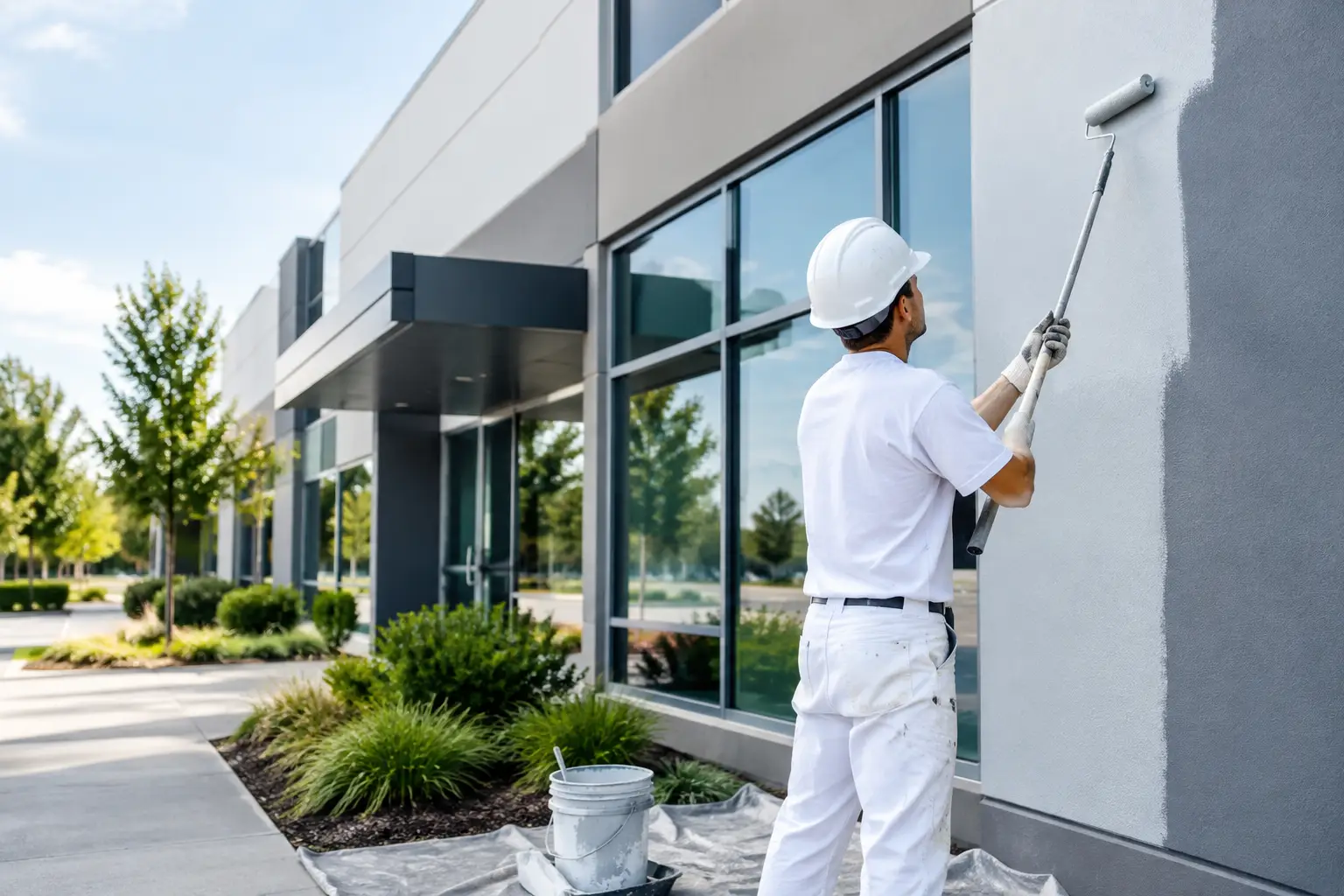
A commercial repainting guide should begin with the reality of your building, not a colour chart. A shopfront, office, school, strata complex or shared workplace needs to stay safe, presentable and functional while work is underway. The right plan protects the property, limits disruption for tenants and customers, and gives the new finish the preparation it needs to last.
Commercial painting is rarely just about making a space look fresher. In coastal and high-traffic parts of the Northern Rivers, surfaces can face salt air, moisture, strong sun, scuffs, hand marks and everyday wear. A considered repaint is an opportunity to deal with those issues before they become larger maintenance concerns.
Start with a clear assessment of the building
Before selecting colours or setting a start date, inspect the surfaces that need attention. Exterior walls, gutters, fascias, timber trim, metalwork, internal corridors, ceilings, doors and car parks all age differently. What looks like tired paint may be a sign of chalking, cracking, water entry, mould, rust or failing previous coatings.
A proper assessment identifies what is cosmetic and what requires repair. For example, peeling paint around windows may point to damaged sealant or moisture getting behind the coating. Repainting without fixing the cause can make the building look good briefly, but the same failure is likely to return.
For strata committees and property managers, it helps to walk the site with a record of priority areas. Note customer-facing spaces, common areas, entries, stairwells, amenities, service corridors and exposed elevations. This makes it easier to stage the work where a full repaint cannot be completed at once.
Look beyond the obvious walls
High-touch and high-use surfaces often need the most practical attention. Doors, handrails, skirting boards, lift surrounds and reception areas can make an otherwise well-kept property appear neglected when they are scuffed or chipped. Exterior metal items may need rust treatment, while timber elements may require stripping, sanding or restoration rather than a simple repaint.
The condition of existing paint also affects the preparation method. Sound coatings may only need thorough cleaning, sanding and spot repairs. Older or failing coatings can require more extensive removal and priming. This is why a site-specific scope matters more than a broad estimate based on floor area alone.
Set the purpose before choosing colour
A repainting project works best when everyone agrees on what it needs to achieve. Is the goal to improve the first impression of a business? Prepare a tenancy for new occupants? Protect exterior surfaces from weather exposure? Bring common areas up to a consistent standard? The answer guides the finish, coating system and programme.
Colour should support that purpose. Lighter colours can help enclosed corridors and stairwells feel brighter, while darker tones on lower walls, doors or trims may better disguise marks in busy areas. External colour choices need more consideration in sunny locations, where very dark shades can absorb heat and place additional stress on some substrates.
Consistency is also valuable in commercial and strata properties. A defined palette for walls, trims, doors and shared areas makes later maintenance simpler. Keeping a written record of colours and products used means small repairs can be matched more accurately down the track.
Plan around people, access and trading hours
The best commercial painters do not treat an occupied property like an empty building site. Access, noise, dust control, parking, deliveries, foot traffic and emergency exits all need to be considered before work starts.
For a retail premises, early mornings, evenings or quieter trading periods may be the most suitable time for disruptive preparation. In an office, work can often be completed section by section so staff can continue using other areas. At a strata complex, clear notices give residents time to move outdoor furniture, close windows and plan around access requirements.
A practical work plan should cover the sequence of areas, expected access needs, protection of floors and furnishings, daily clean-up, and how the team will communicate changes caused by weather or unforeseen repairs. Exterior work in particular depends on suitable conditions. Rushing ahead when surfaces are damp or rain is approaching can compromise the finish.
Keep safety and presentation working together
Commercial sites need tidy, clearly managed work areas. Drop sheets, masking, warning signs and sensible storage of equipment help protect occupants as well as the property. If work affects entry points, paths or parking, temporary arrangements should be agreed before the job begins.
This is especially relevant for schools, medical settings, hospitality venues and apartment complexes. The painting work should fit the way the property operates, not force everyone else to work around an unclear process.
Preparation is where durability is decided
Most long-lasting painting work is won before the first finish coat is applied. Preparation may include washing, mould treatment, scraping loose paint, sanding glossy surfaces, filling cracks, repairing minor substrate damage, treating rust, sealing stains and applying the correct primers.
Each step has a purpose. Cleaning removes contaminants that prevent adhesion. Sanding gives new coatings a surface to grip. Primers help manage different materials and problem areas. Caulking and filling create a neater finished line while helping close small gaps that can admit moisture.
There is a trade-off here: careful preparation takes time, but skipping it often leads to early peeling, uneven sheen, visible patches and recurring maintenance. On a commercial property, that can mean more disruption later. A professional scope should explain the preparation required in plain language, particularly where the condition of the building may affect the programme.
Choose coatings for the surface and its use
There is no single best paint for every commercial setting. A busy internal hallway has different needs from a sun-exposed rendered wall, a warehouse floor, a timber deck or steel balustrade. The coating must suit the surface, the environment and the level of cleaning or abrasion it will receive.
For internal areas, washable low-sheen finishes are often a practical choice for walls because they balance appearance with day-to-day maintenance. Ceilings need a finish that helps reduce the appearance of imperfections and provides even coverage. Doors, trims and metalwork may need tougher enamel-style coatings, depending on the substrate and expected use.
Outside, protection from UV exposure, rain and coastal conditions is central. Surface compatibility is just as important as the quality of the topcoat. Applying a premium finish over an unsuitable or poorly prepared base will not deliver the result a property owner expects.
Ask for the coating system to be matched to the job rather than selected solely by colour or sheen. This is particularly important where the building has a mix of render, timber, masonry, fibre cement and metal surfaces.
Communicate clearly with tenants and stakeholders
A repaint can run smoothly even in a busy property when people know what is happening and when. Property managers can reduce frustration by providing advance notice, outlining access changes and giving occupants one clear point of contact for questions.
For larger sites, it is useful to confirm who can approve colour samples, minor variations and access to locked areas. Delays often arise not from the painting itself, but from uncertainty around decisions or site access. Clear communication keeps the project moving without unnecessary pressure on the people using the building.
North Coast Painting Services takes an unhurried, organised approach because commercial work needs more than a tidy final coat. It needs reliable scheduling, respectful tradespeople and a process that considers the people on site.
Inspect the work before the project is closed
A final walk-through is the time to check details in normal lighting and from the viewpoints occupants will use every day. Look for clean cut-in lines, consistent coverage, neat edges around fittings, properly finished repairs and paint-free hardware, glass and floors.
It is also worth confirming that touch-up colours are recorded and that the site has been left clean. If exterior work has been completed, inspect from a practical distance as well as close up. The finish should look even across broad walls, trims and visible elevations, not simply acceptable in isolated patches.
Good maintenance begins once the painters leave. Keep exterior surfaces clear of built-up dirt and vegetation, deal with leaks promptly, and attend to small chips before moisture can work underneath the coating. A planned repaint is far easier to manage than waiting until a tired finish turns into a repair issue.